
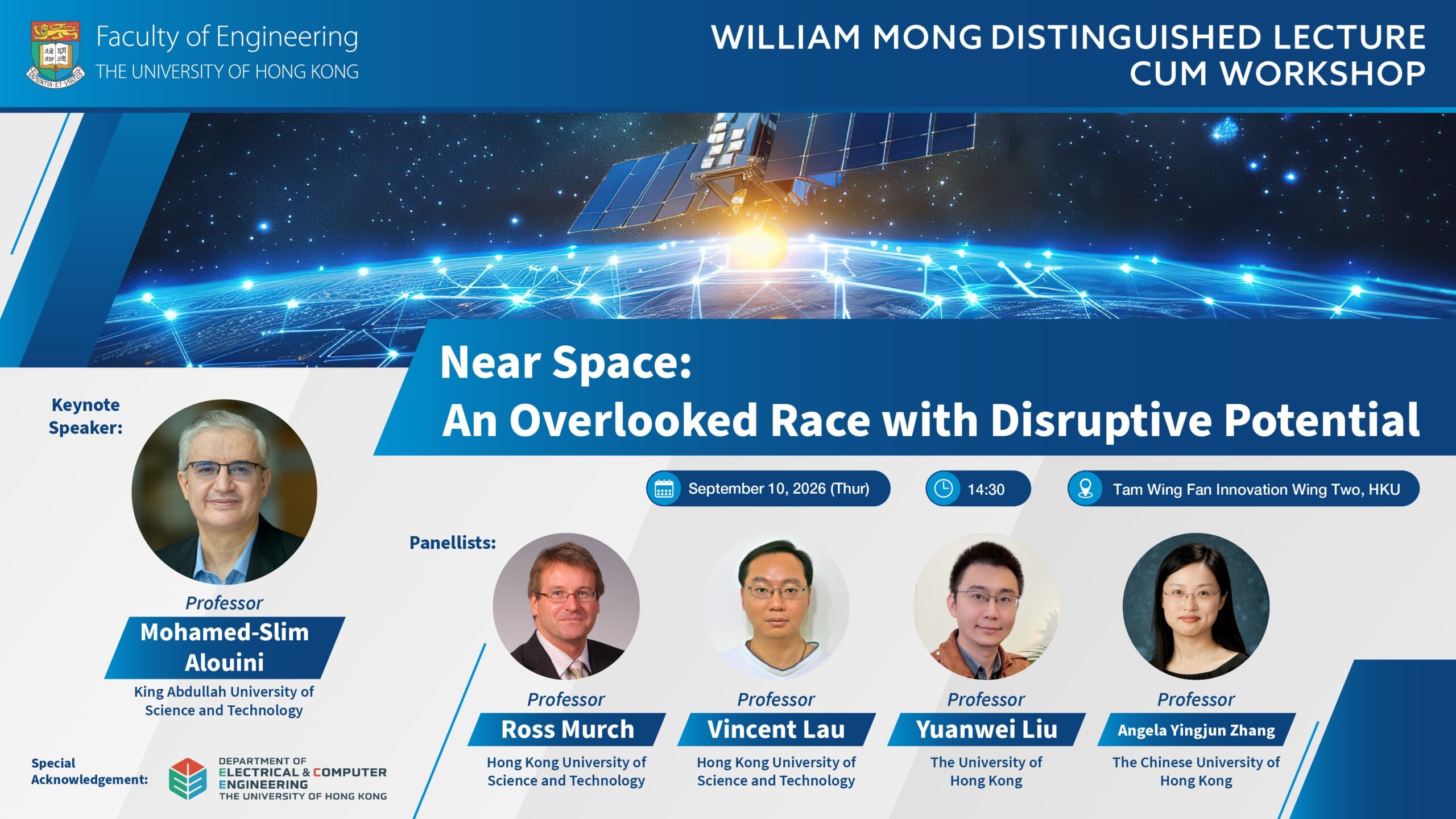
Keynote Speaker
Professor Mohamed-Slim Alouini, King Abdullah University of Science and Technology
About the lecture
Professor Mohamed-Slim Alouini’s lecture will explore the emerging opportunities of High-Altitude Platform Stations (HAPS) and near-space communications, with particular emphasis on their potential roles in future wireless networks, spectrum sharing, and free-space optical communications.
Following the lecture, a distinguished panel of experts from HKU, HKUST, and CUHK will discuss “6G Non-Terrestrial Networks: From Near-Space Connectivity to Integrated Air-Space-Ground Networks.” The discussion will examine key opportunities, enabling technologies, and research challenges in integrating terrestrial and non-terrestrial networks toward ubiquitous, resilient, and intelligent connectivity.
Registration
All members of the HKU community and the general public are welcome to join. Seats for on-site participants are limited. Interested parties, please register through the link below by September 10, 2026, 12:00 pm:
https://hkuems1.hku.hk/hkuems/ec_hdetail.aspx?guest=Y&ueid=109058
A confirmation email will be sent to participants who have successfully registered.
About the keynote speaker
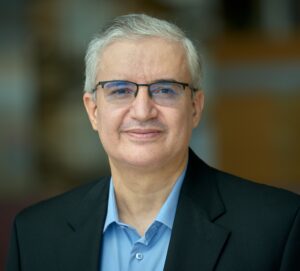
Professor Mohamed-Slim Alouini, King Abdullah University of Science and Technology
Professor Alouini earned his Ph.D. from the California Institute of Technology (Caltech) in 1998 before serving as a faculty member at the University of Minnesota and later at Texas A&M University at Qatar. In 2009, he became a founding faculty member at King Abdullah University of Science and Technology (KAUST), where he currently is the Al-Khawarizmi Distinguished Professor of Electrical and Computer Engineering and the holder of the UNESCO Chair on Education to Connect the Unconnected. His research interests encompass a wide array of research topics in wireless and satellite communications. He is currently particularly focusing on addressing the technical challenges associated with information and communication technologies (ICT) in underserved regions. Professor Alouini is a Fellow of the IEEE, OPTICA, NAE, and SPIE. He is an international member of U.S. National Academy of Engineering (2026), Foreign Member of the Academia Europaea (2019), and a Member of the European Academy of Sciences and Arts (2019). He became a Fellow of the UNESCO World Academy of Sciences in 2022. He received National Science Foundation (NSF) CAREER Award and several Best Paper and Recognition awards from IEEE.
Panellists
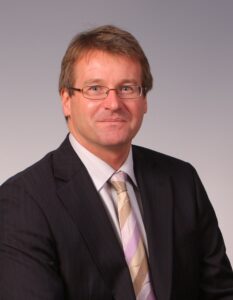
Professor Ross Murch, Hong Kong University of Science and Technology
Professor Ross Murch is a Chair Professor of Electronic and Computer Engineering at HKUST and a Fellow of IEEE, IET and HKIE. His research spans wireless communications, MIMO, antenna systems, 6G and the Internet of Things, combining expertise in both communication systems and electromagnetics. He has published more than 300 papers and holds 20 patents. Professor Murch previously served as Head of the ECE Department at HKUST and was the founding Director of the Center for Wireless Information Technology. He is also the founding Editor-in-Chief of the IEEE Journal of Selected Topics in Electromagnetics, Antennas and Propagation.
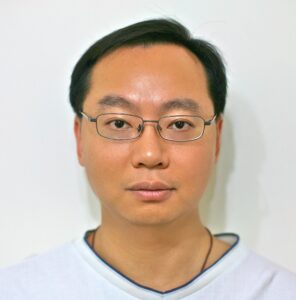
Professor Vincent Lau, Hong Kong University of Science and Technology
Professor Vincent Lau is Chair Professor at HKUST and an internationally recognized expert in wireless communications and signal processing. Before joining HKUST, he worked at Bell Labs on 3G systems, MIMO, and wireless standardization. He has published over 300 journal papers, contributed to more than 50 granted US patents, and made key contributions to IEEE 802.22 standards. He is the founder and director of the Huawei-HKUST Innovation Lab and has advised major technology companies including Huawei and ZTE. Prof. Lau has also held major public service roles in Hong Kong, including membership of the Communications Authority and Competition Commission.
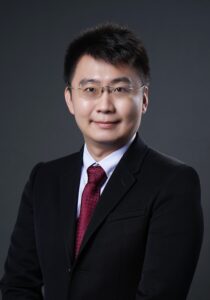
Professor Yuanwei Liu, The University of Hong Kong
Professor Yuanwei Liu is a Professor in the Department of Electrical and Computer Engineering at The University of Hong Kong. He is an IEEE Fellow, an AAIA Fellow, and a Web of Science Highly Cited Researcher, reflecting his significant research impact and international recognition. He currently serves as Editor-in-Chief of IEEE Transactions on Green Communications and Networking and Chair of the IEEE Communications Society SPCC Technical Committee. He is also an IEEE Communications Society/Vehicular Technology Society Distinguished Lecturer. His academic achievements and professional leadership have established him as a highly recognized researcher in the communications community.
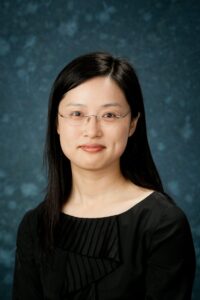
Professor Angela Yingjun Zhang, The Chinese University of Hong Kong
Professor Angela Yingjun Zhang is a Professor in the Department of Information Engineering at The Chinese University of Hong Kong. She is an IEEE Fellow, HKIE Fellow, and IET Fellow, recognized for her contributions to resource allocation and optimization in wireless communications. She currently serves as a Member-at-Large of the IEEE Communications Society Board of Governors and Steering Committee Chair of IEEE Wireless Communications Letters, and previously served as Editor-in-Chief of IEEE Open Journal of the Communications Society. Her honors include the IEEE Marconi Prize Paper Award, two IEEE ComSoc Asia-Pacific Outstanding Paper Awards, and the Hong Kong Young Scientist Award.